Aly McNicoll
NZCMC Director
B Ed (Adult Ed. & Training), Cert. Training and Development, MNZATD
Aly McNicoll has been involved with coaching and mentoring in NZ and Australia for the last 12 years with a particular interest in training. She has refined techniques for both introducing coaching as a skill set and promoting learning as a way of being in teams and organisations.
Aly is a regular presenter at international conferences (American Society for Training & Development Conference, European Mentoring & Coaching Council Conference) where her specialist skills in peer learning techniques have led to her spending increasing proportions of her time working with clients in Australia, the UK and the USA.
Aly is a member of the European Mentoring & Coaching Council and an international associate of Clutterbuck Associates (UK).
Prior to her corporate training role, Aly has led leadership and management programmes at Unitec Institute of Technology where she also spent 4 years training tutors in the staff development unit. She is also a qualified counsellor.
Contact
021 304 761
aly@coachingmentoring.co.nz
If you're a not for profit leader, (or leading anyone) you've probably been told that you should be coaching your team. But with never-ending meetings, KPIs, and the daily juggle, coaching can feel like a “nice-to-have” rather than a non-negotiable.
The truth is, regular coaching isn’t just a fluffy add-on to leadership—it’s one of the most powerful ways to build capability, boost engagement, and get results.
Regular coaching by senior policy writers plays a critical role in building capability and confidence among less experienced staff. Through structured coaching conversations, emerging policy advisors gain insight into how experienced practitioners analyse complex issues, balance evidence and risk, and craft clear, well-reasoned advice for Ministers and stakeholders. This accelerates learning beyond formal training and helps newer staff develop sound judgement, stronger writing skills, and a deeper understanding of the organisation’s quality standards and expectations.
The New Zealand Coaching & Mentoring Centre has recently entered an exciting new chapter. After many years of working together as three directors, one of our directors has retired and another has established their own independent practice, specialising in senior leadership coaching.
It feels like both an ending and a beginning. I’m incredibly grateful for the years of collaboration, ideas and shared work that have helped shape the Centre into what it is today.
And I’m also really excited about taking on sole ownership of the Centre and putting my full focus into what I love most – developing people through high-quality coaching, mentoring and supervision training. While the ownership structure has changed, our commitment to practical, relevant and engaging learning remains the same.
Organisations today face a common challenge: how do you develop leaders at scale while fostering collaboration, accountability, and continuous learning across the business?
Traditional leadership development programmes often rely heavily on external expertise, formal training, and one-to-one coaching. While these approaches have value, they can be expensive, difficult to scale, and may not fully leverage one of the organisation's greatest assets—its own people.
Peer coaching groups offer a powerful alternative.
Working in the not-for-profit sector is often a calling rather than just a career. People come into these roles with deep compassion, a drive to make a difference, and a willingness to walk alongside those experiencing hardship, trauma, and systemic injustice. But while the mission is meaningful, the emotional toll can be significant.
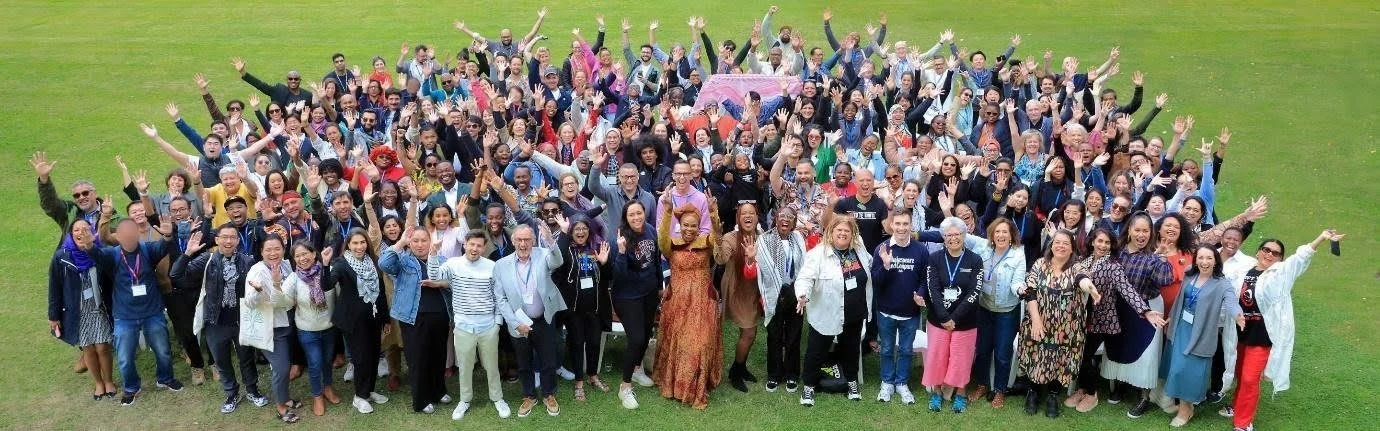
A highlight of my year was the invitation I received to present workshops at the global convening for leaders hosted by the Atlantic Institute in Oxford, UK. The Atlantic Institute, part of the Rhodes Scholars network, brings together fellows from around the world who are leaders working on projects and initiatives in the areas of social, brain, and health equity.
I was invited to run sessions on peer mentoring and coaching skills—practical tools to strengthen the leadership journeys of these remarkable fellows. A central focus of the workshops was the use of peer mentoring groups as a methodology for providing an extra layer of both personal and professional support. These groups are designed to help leaders as they return home to their own countries and organisations after their 12 month leadership development programme.
In the journey to building a coaching culture, leaders must be able to hold effective coaching conversations with staff. But do they have the time? Aly McNicoll outlines 5 key ways to get managers to coach in a busy work environment.
One-on-one coaching is effective, but to truly leverage learning in the workplace, peer group coaching is the way of the future, says Aly McNicoll. It’s a cost-effective way to cascade coaching throughout an entire organisation.
Originally published in Employment Today 224, December 2018
Many organisations invest in coaching training for managers then feel disappointed when enthusiasm peters out and busyness gets in the way of managers investing time in developing others.
A one-off training provides a ‘sheep dip’ approach to changing leadership behaviours so what can you do as a manager to support your people to coach others? Here are 4 keys to ensure your training investment pays off and that coaching becomes part of the ‘way we do things around here’.
Peer group coaching addresses some of the challenges organisations face in providing coaching to all those need it including the availability of skilled and qualified coaches who know the business plus the resources it takes - both time and money - to ensure coaching is available to all.